Archives
-

Juni
Vol. 1 No. 1 (2025)BARAYA: International Journal of Arabic and World Languages Education, Vol. 1 Issue 01 (2025)
The first issue of BARAYA presents a diverse selection of research that explores foundational, psychological, and innovative instructional approaches in Arabic language education at the elementary school level. This issue features studies on context-specific assessment techniques for young learners, cognitive and affective dimensions in second language acquisition, and comparative analyses of native versus foreign language learning environments between Jordan and Indonesia. Several articles highlight practical strategies for integrating technology in Arabic instruction while maintaining Islamic educational values, as well as creative pedagogical methods such as musical drama for vocabulary development in Madrasah Ibtidaiyah. Collectively, the contributions in this issue offer fresh perspectives and applicable insights for teachers, researchers, and educational practitioners committed to improving the effectiveness and quality of Arabic language learning.
-
Juni
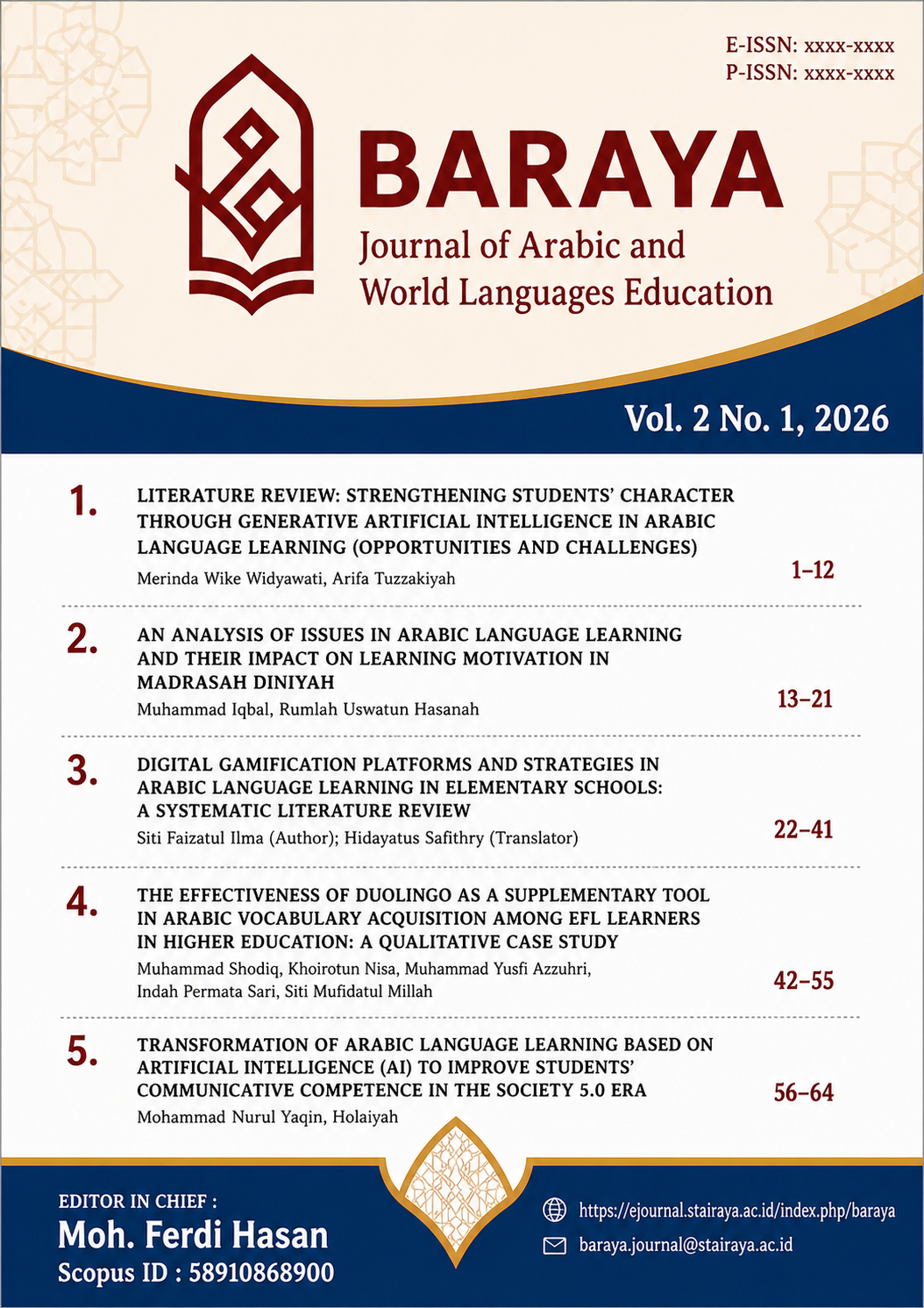
Vol. 2 No. 1 (2026)The first issue of Volume 2 of BARAYA presents a collection of scholarly articles addressing current developments, challenges, and innovations in Arabic language education in the digital era. This issue highlights studies on the role of generative artificial intelligence in strengthening students’ character, issues affecting learning motivation in Madrasah Diniyah, and the use of digital gamification to support Arabic language learning in elementary schools. The articles also explore Duolingo as a supplementary tool for Arabic vocabulary acquisition in higher education and the transformation of Arabic language learning through artificial intelligence to enhance students’ communicative competence in the Society 5.0 era. Together, these contributions provide valuable insights for researchers, educators, and practitioners seeking to advance Arabic language education through innovative, technology-supported, and context-responsive approaches.
-
December
Vol. 1 No. 2 (2025)BARAYA: International Journal of Arabic and World Languages Education, Vol. 1 Issue 02 (2025)
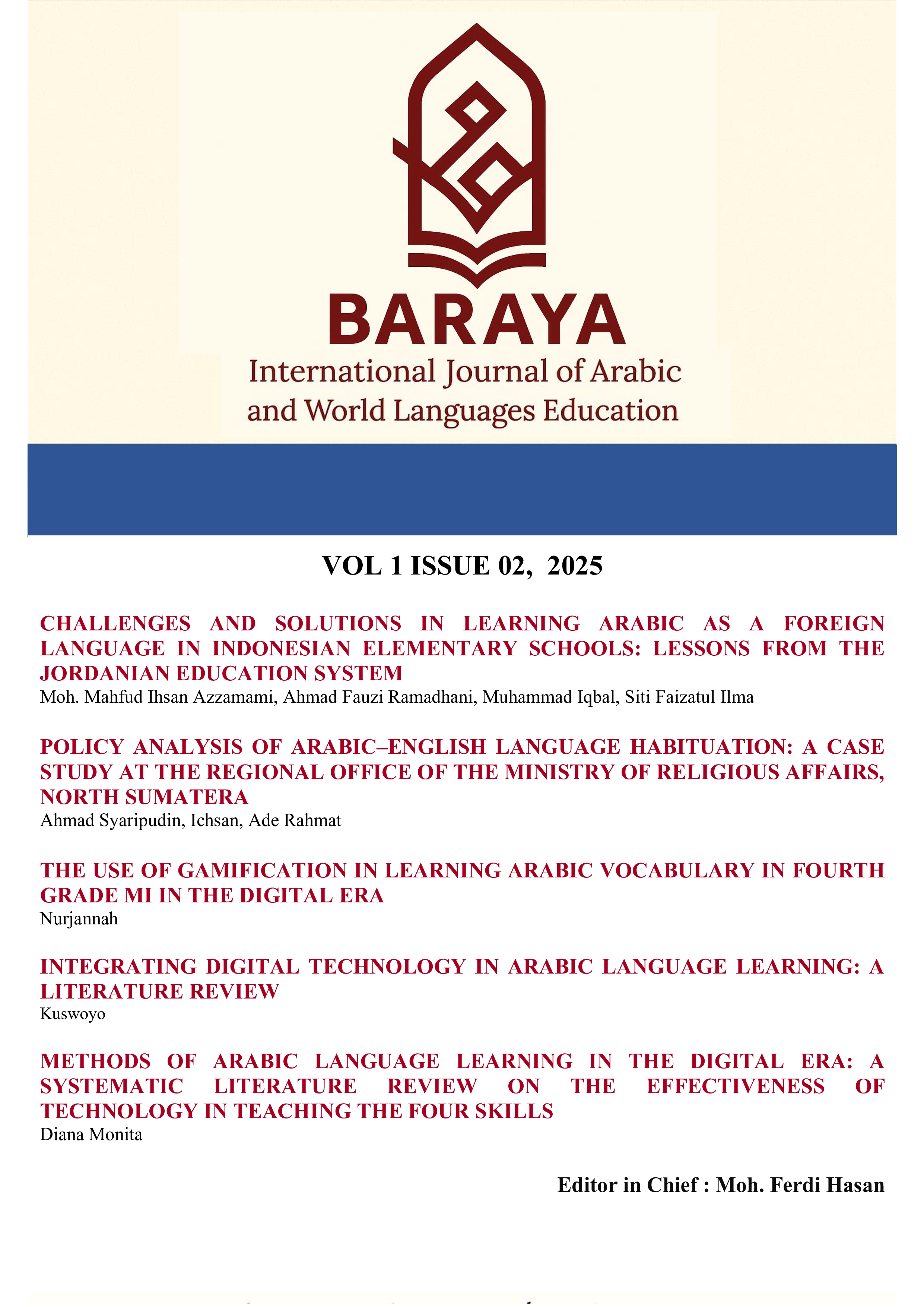
The second issue of BARAYA presents a collection of scholarly articles addressing current developments, challenges, and innovations in Arabic language education within various educational contexts. This issue highlights studies on teaching Arabic as a foreign language in Indonesian elementary schools, policy analysis of Arabic–English language habituation, and the growing use of digital technology to support language acquisition. The articles explore practical solutions informed by international perspectives, including lessons from the Jordanian education system, as well as contemporary approaches such as gamification and systematic literature reviews on technology-based learning. Together, these contributions provide valuable insights for researchers, educators, and policymakers seeking to enhance the quality of Arabic language education in the digital era.